Vegan vs Cruelty-Free: What's the Difference?
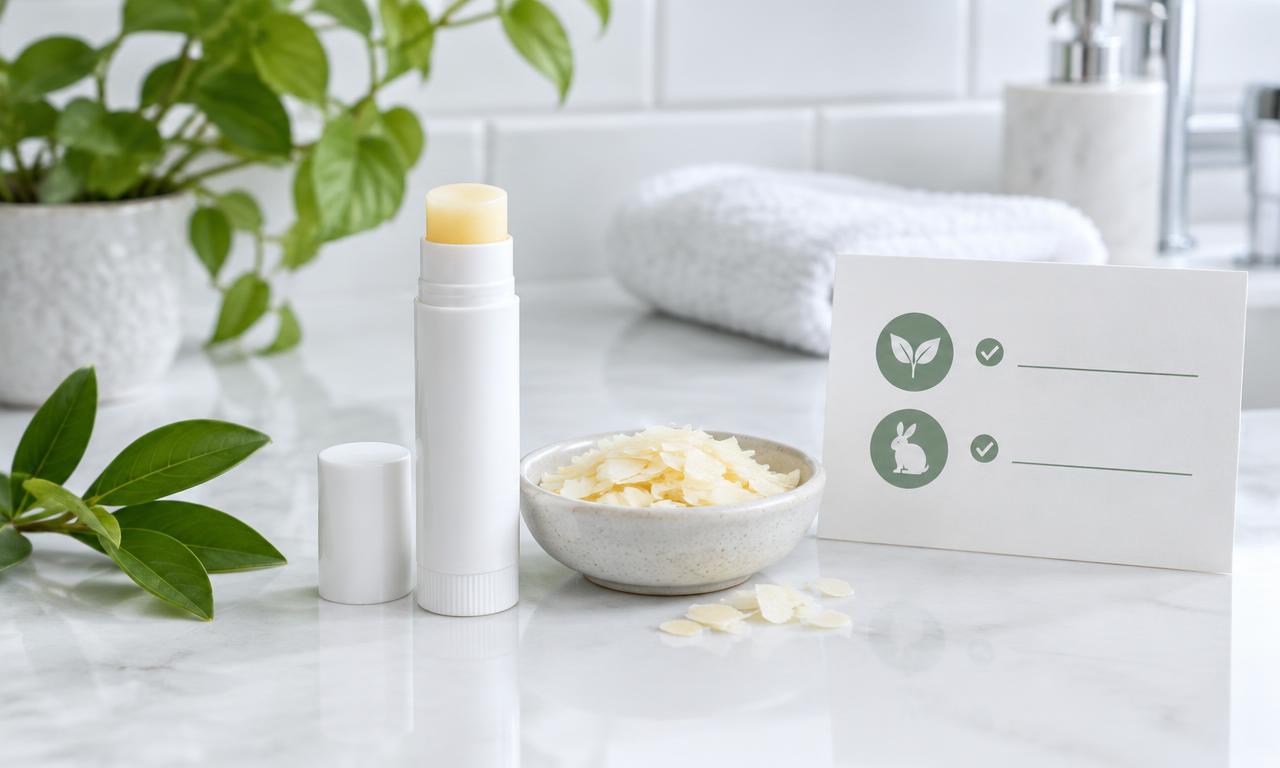
Vegan and cruelty-free sound interchangeable but cover different things. Here's exactly what each guarantees and how to find products that are both.
In 2026, the global shift toward conscious consumerism has reached a definitive tipping point. Shoppers are no longer satisfied with vague 'natural' claims; they demand transparency regarding how their skincare, makeup, and household cleaners are formulated. However, a significant point of confusion remains in the distinction between 'vegan' and 'cruelty-free' labels. While many consumers use these terms interchangeably, they represent two fundamentally different ethical standards. Veganism focuses on the ingredients within the bottle, while cruelty-free status focuses on the testing processes that occur before the product reaches the shelf.
Understanding this nuance is critical because a product can be vegan while still having its ingredients tested on animals, and conversely, a cruelty-free product can contain animal-derived ingredients like lanolin or beeswax. As the beauty and wellness industry evolves, brands are increasingly seeking third-party validations to prove their claims. This guide breaks down the legal definitions, the loopholes frequently used by major conglomerates, and the specific certifications you should look for to ensure your cabinet reflects your values without compromising on performance or safety.
Defining Vegan: It is All About the Ingredients
When a product is labeled 'vegan,' it indicates that the formula contains no animal-derived ingredients or by-products. In the world of cosmetics and household goods, animal ingredients are surprisingly prevalent, often hidden under scientific names that the average shopper might overlook. Common examples include carmine, a red pigment derived from crushed beetles used in lipsticks, or keratin, which is often sourced from ground-up hooves, feathers, and hair of farmed animals. Other frequent flyers include squalene (traditionally from shark liver oil, though now often sourced from olives) and stearic acid (which can be derived from pig or cow stomachs).
However, a 'vegan' label on its own does not legally guarantee that the product was not tested on animals. It is a common beginner trap to assume that 'vegan' implies an all-encompassing ethical purity. In reality, a company could formulate a product using only synthetic or plant-based materials but then pay for laboratory tests on rabbits or mice to satisfy regulatory requirements in certain international markets. To ensure a product is truly vegan, look for the Vegan Society’s trademark or the PETA 'Certified Vegan' logo, as self-made brand claims are not always subject to rigorous third-party auditing. Brands like Pacifica and Elf Cosmetics have built their entire empires on being 100% vegan, showing that high performance doesn't require animal by-products.
Defining Cruelty-Free: The Testing Process
Cruelty-free refers specifically to the absence of animal testing at every stage of a product's development. This includes the individual raw ingredients, the intermediate formulations, and the final finished product. A cruelty-free brand ensures that no animal—be it a rabbit, rat, or guinea pig—was subjected to skin and eye irritation tests or lethal dose toxicity studies. In the modern era, these archaic methods are increasingly replaced by sophisticated alternatives like 'in vitro' testing using lab-grown human skin cells or computer modeling.
It is vital to note that a cruelty-free product is not necessarily vegan. Many brands that do not test on animals still use animal-derived ingredients. For example, a cruelty-free mascara might use beeswax (cera alba) for its thickening properties, or a high-end moisturizer might use lanolin (oil from sheep's wool) for its emollient benefits. The most respected gold standard for this claim is the Leaping Bunny certification. Administered by the Coalition for Consumer Information on Cosmetics (CCIC), this requires brands to implement a supplier monitoring system and open their books to independent audits. Unlike generic bunny logos often found on packaging, the Leaping Bunny is the only internationally recognized guarantee that a brand has eliminated animal testing from its entire supply chain.
The Grey Area: Parent Companies and Global Markets
One of the most complex challenges in 2026 is the hierarchy of brand ownership. Many smaller, ethical brands that started as 100% vegan and cruelty-free have been acquired by large multinational corporations. For instance, a brand might be Leaping Bunny certified, but its parent company may still engage in animal testing for its other subsidiaries or in specific geographical regions. This creates an ethical dilemma for some: Does buying a cruelty-free product from a brand owned by a non-cruelty-free parent company help 'vote' for change, or does it simply fund the parent company's broader practices?
Furthermore, the issue of 'selling in mainland China' used to be a definitive dealbreaker. Previously, Chinese law mandated animal testing for all imported cosmetics. While regulations have significantly relaxed as of 2025 and 2026, allowing for 'ordinary' cosmetics (like shampoo and lipstick) to bypass animal testing if they meet certain manufacturing standards, 'special' cosmetics (like sunscreens and hair dyes) may still require it. Savvy consumers look for brands that have completely pulled out of markets requiring these tests or those that manufacture locally in China to bypass the import-testing mandates. Checking a brand's status on databases like Cruelty-Free Kitty or Beauty Without Bunnies is the fastest way to clear up this confusion.
Key Certifications to Trust
Navigating the 'greenwashing' of 2026 requires looking past pretty packaging to the actual seals of approval. Here are the certifications that actually hold weight:
- Leaping Bunny: The strictest cruelty-free standard. It requires a supplier monitoring system and regular audits. If you see this, you can trust no animal testing occurred. - The Vegan Society: The oldest and most recognized vegan certification. It guarantees no animal ingredients AND that no animal testing was conducted by the brand itself (though Leaping Bunny is more rigorous on the testing side). - PETA (Beauty Without Bunnies): Offers two logos—one for cruelty-free and one for both vegan and cruelty-free. While widely recognized, PETA relies more on brand statements than the rigorous audits used by Leaping Bunny. - B Corp: While not strictly about veganism, B Corp certification indicates a company meets high standards of social and environmental performance, transparency, and accountability. Brands like Aesop and The Body Shop use this to show a holistic ethical approach. - Choose Cruelty Free (CCF): An Australian-based accreditation that has merged with Cruelty Free International. It is highly respected for its strict criteria regarding parent companies.
By prioritizing products with these logos, you bypass the need to decode complex ingredient lists like 'sodium tallowate' (rendered fat) or 'guanine' (fish scales).
Hidden Animal Ingredients: What to Watch For
Even if you are an experienced label reader, some animal by-products are remarkably well-disguised. Many consumers are surprised to learn that 'retinol' can be derived from animals, though most modern brands use synthetic versions. 'Glycerin' is another tricky one; it can be vegetable-based (from soy or coconut) or animal-based (from tallow). Unless the label specifies 'vegetable glycerin,' there is no way to know for sure without contacting the manufacturer. Collagen is another massive trend in 2026, but unless it is labeled 'vegan collagen' (which is usually a blend of amino acids that mimic collagen), it is almost certainly sourced from bovine or marine sources.
- Shellac: Often found in nail polishes and hairsprays, it is a resin secreted by the female lac bug. - Casein: Derived from cow's milk and often used in hair conditioners. - Tallow: Rendered beef fat, appearing in many traditional bar soaps. - Oleic Acid: Can be from animal or vegetable fats, used as an emollient.
To avoid these, look for the 'Certified Vegan' logo, which ensures that even the processing aids used during manufacturing—which don't have to be listed on the label—are free from animal products. For example, some sugars are processed with bone char to achieve a white color; a certified vegan product would ensure this is not the case.
The Economics of Ethical Shopping
A common misconception is that vegan and cruelty-free products are prohibitively expensive. In 2026, the 'price-per-use' math has shifted as mass-market brands like e.l.f., NYX, and Milani have achieved cruelty-free status without raising prices to luxury levels. When evaluating the cost, consider the concentration of the product. Many ethical brands avoid 'fillers' like water and mineral oil, meaning you use less product per application. A $30 vegan moisturizer that lasts four months ($7.50/month) is often a better value than a $15 conventional bottle that lasts only six weeks ($10/month).
Furthermore, the long-term 'cost' of non-ethical products often involves environmental externalities. Traditional ingredients like palm oil (if not RSPO certified) or certain animal-fats involve significant ecological destruction. By paying a small premium for GOTS-certified (Global Organic Textile Standard) cotton pads or FSC-certified (Forest Stewardship Council) packaging, you are investing in a supply chain that minimizes waste. Many cruelty-free brands also offer refill schemes—brands like Kjaer Weis or Ethique allow you to buy the outer packaging once and then purchase cheaper refills, significantly lowering the average cost over time while reducing plastic waste.
The Environmental Connection: Why It Matters
Vegan cosmetics are frequently more environmentally friendly because animal agriculture is a leading driver of deforestation, water consumption, and greenhouse gas emissions. However, it is an oversimplification to say all vegan ingredients are 'green.' Some synthetic alternatives to animal products are derived from petroleum. This is why looking for a cross-section of certifications is essential. For example, a product that is both Vegan and USDA Organic ensures that the plant-based ingredients were grown without toxic pesticides that harm local ecosystems and pollinators like bees.
In 2026, the most responsible brands are moving toward 'Blue Beauty'—focusing on ocean safety. This means ensuring that vegan sunscreens are 'reef-safe' (avoiding oxybenzone and octinoxate) and that cruelty-free soaps are biodegradable. The EWG (Environmental Working Group) Verification is an excellent secondary check here. While EWG doesn't focus on veganism specifically, they vet products for chemical safety. A product that carries the Leaping Bunny logo, a Vegan trademark, and is EWG Verified represents the peak of modern ethical formulation. This holistic approach ensures that in protecting animals, we aren't accidentally harming the environments they live in.
How to Transition Your Routine
Transitioning to a vegan and cruelty-free lifestyle does not mean throwing away everything in your bathroom today. In fact, from a sustainability perspective, the most ethical thing you can do is use up the products you already own. Wasting a half-full bottle of non-vegan lotion does not help the animal that was already used in its production; it simply adds to the landfill. Instead, adopt a 'replacement strategy.' As you run out of an item, research a vegan and cruelty-free alternative to take its place.
Start with the 'big three' of your routine: your cleanser, your moisturizer, and your sun protection. These are the items you use in the highest volume. Then, move to color cosmetics. Websites like 'Logical Harmony' and 'Ethical Elephant' maintain updated lists of brands that meet both criteria. Beware of 'natural-washing' where a brand uses earthy tones and leaf imagery to imply they are ethical without having any actual certifications. Always verify the back of the bottle. By 2026, many apps allow you to scan a barcode and instantly see a product's ethical profile, making it easier than ever to align your purchases with your conscience.
Check ingredients and animal-testing policy separately
| Priority | What to check | Why it matters |
|---|---|---|
| Vegan claim | Ingredient list and the scheme’s product scope | Animal-derived inputs and testing policy are different questions. |
| Cruelty-free claim | Scheme rules and the exact brand or product listing | A testing-policy label does not establish vegan ingredients. |
| Formula | Exact variant and current package | Similar names can have different ingredients. |